
Hinged knee protector | ST433D
Knee protector to provide stability and reduce swelling in the knee joint
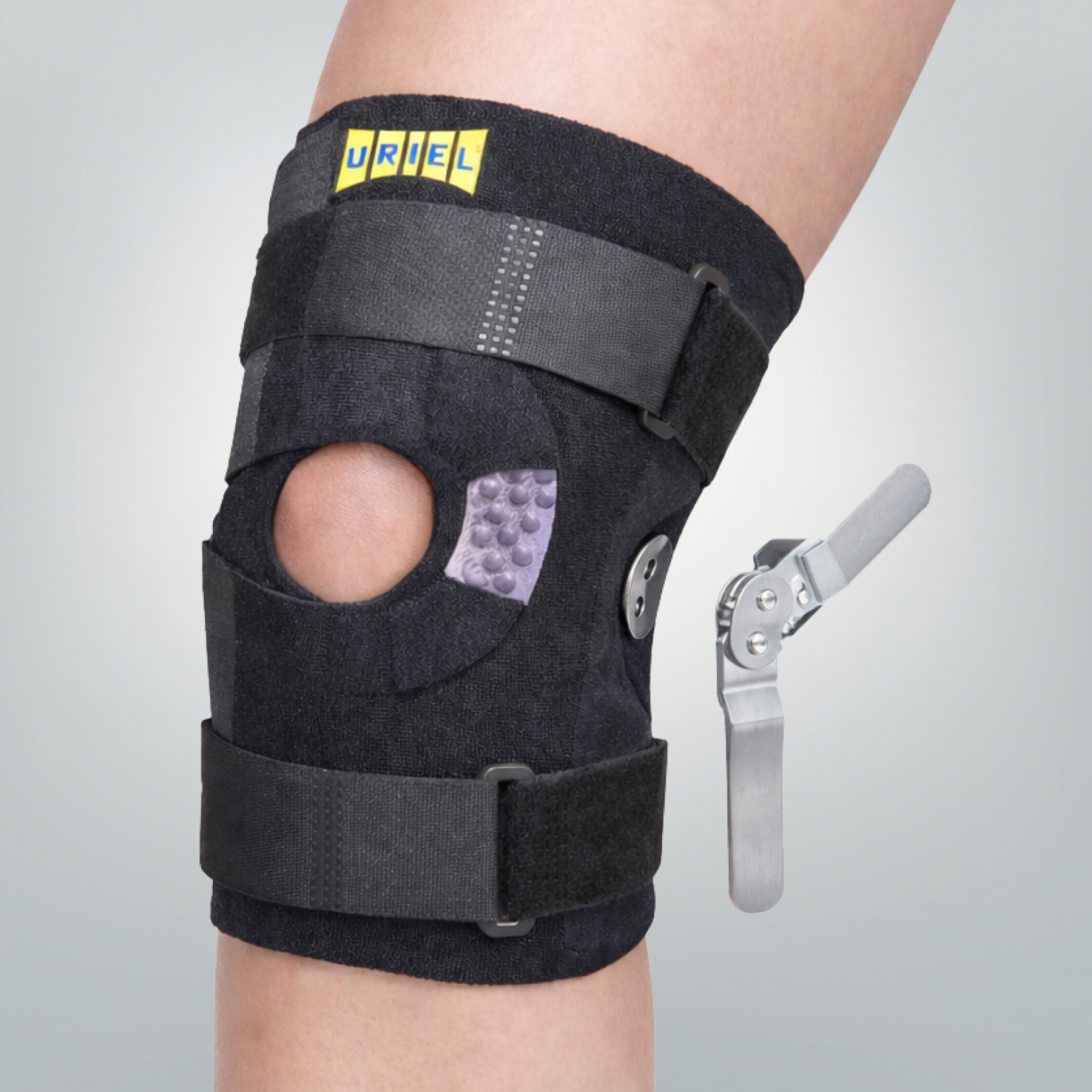
Knee protector with easy adjustment mechanism with Velcro fasteners. No need to take the product off the foot, just wrap around the knee and tighten the Velcro fasteners. Two peripheral reinforcement straps provide additional support and stability, ensuring that the protector does not slide down during use. Has double hinges to protect against lateral knee collapse. Silicone pad to reduce pain in the kneecap and reduce swelling (fluid) in the peripheral area of the patella.
Medical indications:
- Before/after meniscus surgery
- Before/after knee ligament tear
- Before/after surgeries to repair the lateral ligaments
- After a rotational injury
- Unstable knee
- Cartilage erosion - Knee OA
Dimensions
Extended description
The ST433D knee brace is designed to provide a combination of mechanical stability, motion control, and targeted load reduction at the knee joint. The open structure allows for easy dressing even in situations of pain, swelling, or limited knee flexion, without the need to dress through the foot.
The dual hinges on both sides of the joint help direct the movement of bending and straightening while reducing lateral loads and shear forces, Thus contributing to a sense of security in movement in patients with ligament instability or after rotational injuries.
The silicone pad around the patella provides peripheral support for the soft tissues, helps reduce direct load on the patella, and improves local proprioception. This combination may contribute to reducing anterior knee pain and improving muscle control around the joint.
The protector is suitable for use in various stages of rehabilitation, in daily activities, as well as in stages of gradual return to physical activity, according to the guidance of a professional.
User manual
- Make sure the shield is fully open and the Velcro fasteners are released.
- The protector should be placed so that the silicone pad is positioned around the kneecap, and the company logo is at the front and top.
- Make sure that the hinges are located on both sides of the knee, parallel to the joint and allowing natural movement.
- Wrap the protector around the knee and tighten the Velcro fasteners until it is securely in place. Without causing excessive pressure. It is important to ensure that the protector is tightened to a degree that allows for proper blood flow.
- The perimeter reinforcement straps must now be tightened.
- Make sure the protector is comfortable and allows free movement of the knee.
- It is recommended to check that the hinges operate smoothly and accompany the natural knee movement.
- The shield can be used during the day or during physical activity, depending on the need or the therapist's instructions.
- The product can be washed in a delicate cycle at a temperature of up to 30 degrees.
- If there is worsening pain, excessive pressure or swelling, Discontinue use and consult a doctor or physiotherapist.
Note: Proper use of the knee brace will contribute to reduced pain, better stability, and improved knee movement. It is important to adjust the use of the shield according to professional guidelines.
Our expert advice
Combination with active rehabilitation
The protector supports the knee, but does not replace muscle strengthening and movement control exercises.
Combining exercises is a condition for real improvement.
When to use
Recommended during walking, prolonged standing and light physical activity.
Prolonged rest is usually not necessary.
Correct tightening
The protector should be tight but not tight.
Numbness, coldness, or discoloration in the foot = too tight.
Dealing with swelling
You can incorporate elevating your legs above heart level for 15 minutes,
Along with performing a gentle forward ankle movement.
Back to sports
The protector is suitable for gradual return to activity after ligament injuries,
Meniscus or rotator cuff injury. It is not intended to allow immediate return to
For intense activity without rehabilitative control.
Progress should be made based on indicators of pain, swelling, range of motion, and motor control.
Cartilage erosion (OA)
May reduce pain during activity, but it is important to be careful to perform strength training,
Balance and adapted aerobic endurance training.
Guiding principle
The protector is designed to allow safer movement – not replace muscle work.
The ST433D knee brace is designed to provide a combination of mechanical stability, motion control, and targeted load reduction at the knee joint. The open structure allows for easy dressing even in situations of pain, swelling, or limited knee flexion, without the need to dress through the foot.
The dual hinges on both sides of the joint help direct the movement of bending and straightening while reducing lateral loads and shear forces, Thus contributing to a sense of security in movement in patients with ligament instability or after rotational injuries.
The silicone pad around the patella provides peripheral support for the soft tissues, helps reduce direct load on the patella, and improves local proprioception. This combination may contribute to reducing anterior knee pain and improving muscle control around the joint.
The protector is suitable for use in various stages of rehabilitation, in daily activities, as well as in stages of gradual return to physical activity, according to the guidance of a professional.
- Make sure the shield is fully open and the Velcro fasteners are released.
- The protector should be placed so that the silicone pad is positioned around the kneecap, and the company logo is at the front and top.
- Make sure that the hinges are located on both sides of the knee, parallel to the joint and allowing natural movement.
- Wrap the protector around the knee and tighten the Velcro fasteners until it is securely in place. Without causing excessive pressure. It is important to ensure that the protector is tightened to a degree that allows for proper blood flow.
- The perimeter reinforcement straps must now be tightened.
- Make sure the protector is comfortable and allows free movement of the knee.
- It is recommended to check that the hinges operate smoothly and accompany the natural knee movement.
- The shield can be used during the day or during physical activity, depending on the need or the therapist's instructions.
- The product can be washed in a delicate cycle at a temperature of up to 30 degrees.
- If there is worsening pain, excessive pressure or swelling, Discontinue use and consult a doctor or physiotherapist.
Note: Proper use of the knee brace will contribute to reduced pain, better stability, and improved knee movement. It is important to adjust the use of the shield according to professional guidelines.
Combination with active rehabilitation
The protector supports the knee, but does not replace muscle strengthening and movement control exercises.
Combining exercises is a condition for real improvement.
When to use
Recommended during walking, prolonged standing and light physical activity.
Prolonged rest is usually not necessary.
Correct tightening
The protector should be tight but not tight.
Numbness, coldness, or discoloration in the foot = too tight.
Dealing with swelling
You can incorporate elevating your legs above heart level for 15 minutes,
Along with performing a gentle forward ankle movement.
Back to sports
The protector is suitable for gradual return to activity after ligament injuries,
Meniscus or rotator cuff injury. It is not intended to allow immediate return to
For intense activity without rehabilitative control.
Progress should be made based on indicators of pain, swelling, range of motion, and motor control.
Cartilage erosion (OA)
May reduce pain during activity, but it is important to be careful to perform strength training,
Balance and adapted aerobic endurance training.
Guiding principle
The protector is designed to allow safer movement – not replace muscle work.
Blog
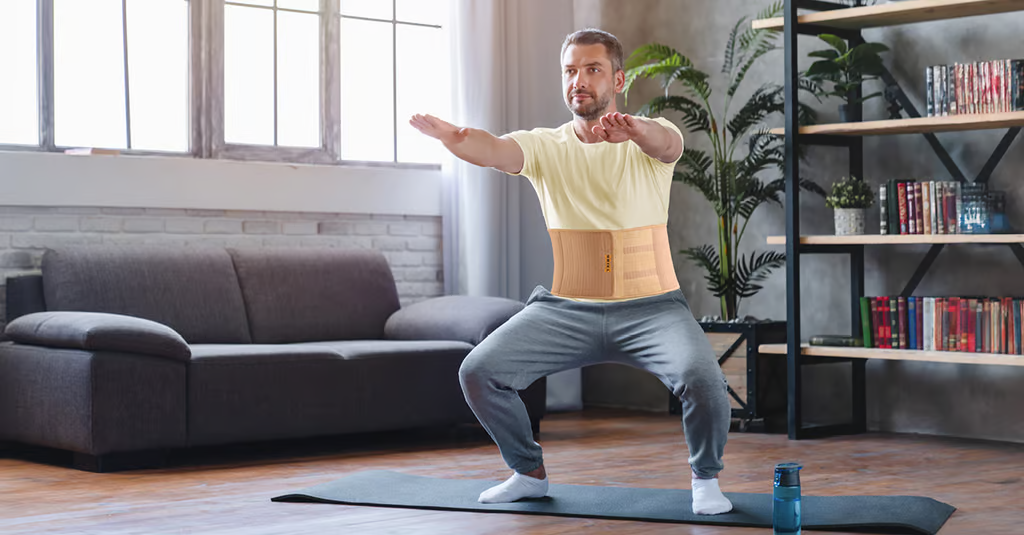
Treating Lower Back Pain: 6 Tips to Improve Quality of Life
Suffering from lower back pain? You are definitely not alone. There are many ways to deal with one of the most common pains in the world, here are some of them. It's time to relieve the pain.
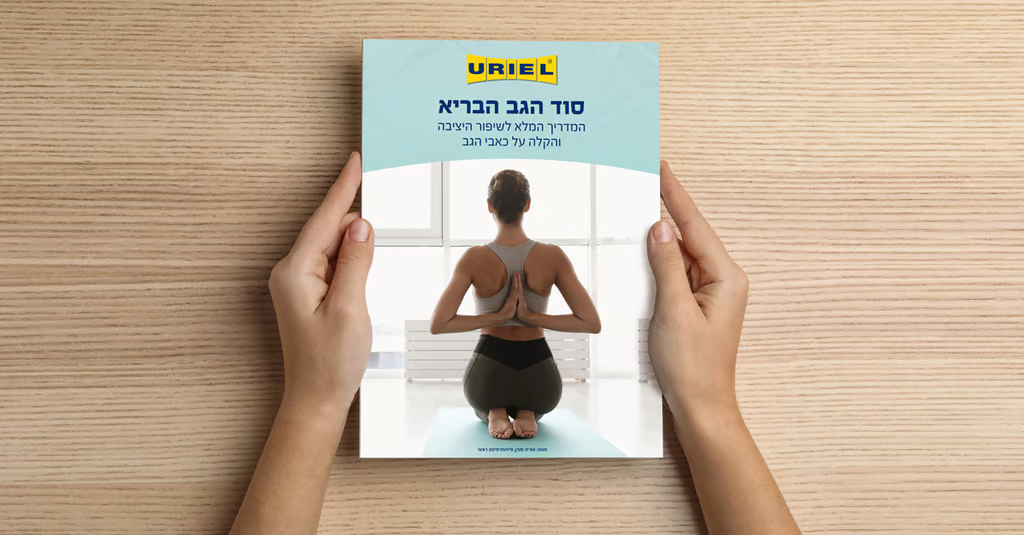
The Secret to a Healthy Back: The Complete Guide to Improving Posture and Alleviating Back Pain
Is back health important to you? Get the 'Secret of a Healthy Back' guide containing information, tips and useful advice for relieving back pain. By Oriya Moran, Chief Physiotherapist Download t...

Kinesio tape or professional elastic bandage?
Suffering from sports injuries, bruises or simply pain caused by medical problems? Get to know the variety of dressing products that will support you. When should we use kinesiology tape and why d...